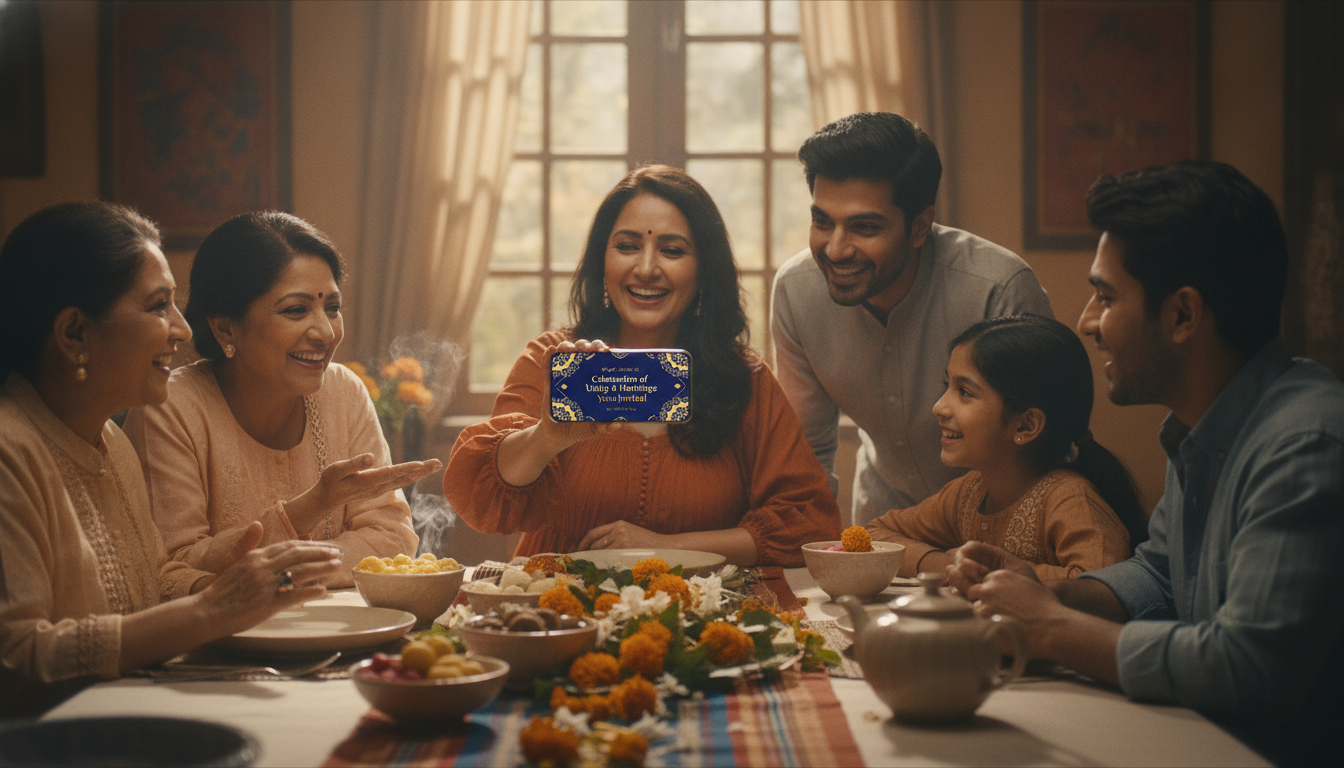

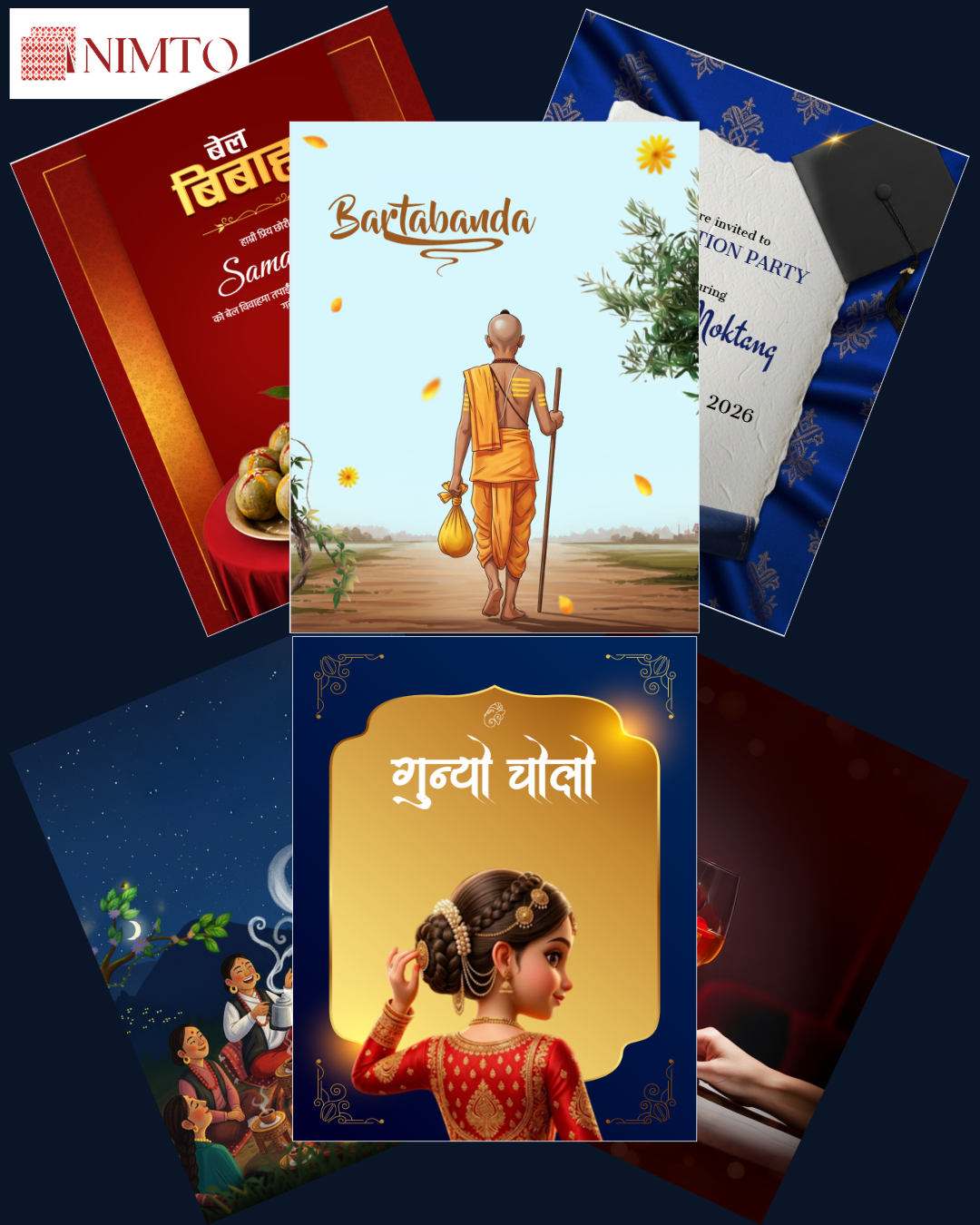
Every culture celebrates differently, but every celebration begins the same way—with an invitation. From hand-delivered scrolls in ancient courts to a single tap on a smartphone, the invitation is a universal thread connecting humanity's most treasured moments. Let's explore how the world celebrates, and why digital invitations are quietly becoming the most powerful cultural bridge of our time.
1. The Universal Language of "You're Invited"
Across continents, languages, and centuries, the invitation has remained one of humanity's most consistent rituals. Whether it's a royal wedding in Rajasthan, a bratabandha ceremony in Kathmandu, a quinceañera in Mexico City, a Lunar New Year banquet in Shanghai, or a christening in Lagos, the act of formally inviting someone signals something deeper than logistics.
Bring this to life
Create this style in Nimto
Jump to templates already aligned with this article's theme and customize in minutes.
Start designing nowAn invitation says: "You matter to us. This moment isn't complete without you."
But how that message is crafted, packaged, and delivered? That's where culture takes center stage.
2. A World Tour of Invitation Traditions
🇳🇵 Nepal: Where Every Invitation Carries a Blessing
Nepali invitations are deeply rooted in spirituality, family, and community. Whether it's a wedding (bibaha), a bratabandha (sacred thread ceremony), a pasni (rice-feeding ceremony), or Dashain and Tihar gatherings, the invitation is treated with reverence.
Traditional Nepali wedding invitations often begin with "Shree" or an invocation to a deity, and prominently feature the names of parents and grandparents—honoring the lineage that brought the couple together. Auspicious dates are determined by a jyotish (astrologer) using the lunar calendar, and these saait timings are carefully printed on the invitation.
In many Nepali households, the first invitation is offered at the family temple or to elders with a tika and sweets, transforming a simple delivery into a sacred ritual. Invitations are often printed in Devanagari script, sometimes with English translations for diaspora relatives in the U.S., U.K., Australia, and the Gulf. Red, gold, and saffron remain the dominant colors—symbolizing prosperity, devotion, and joy.
For the growing Nepali diaspora, sending invitations across continents has become a logistical challenge that digital platforms are finally solving.
🇮🇳 India: The Invitation as a Sacred Gift
Indian wedding invitations are rarely simple cards. They are elaborate, multi-page works of art—often accompanied by sweets, dry fruits, or even silver coins. The invitation traditionally opens with an invocation to a deity (like Lord Ganesha) and lists the names of elders and ancestors. Hand-delivering the first invitation to a temple or close family member is considered auspicious.
🇯🇵 Japan: The Art of Restraint
Japanese invitations, especially for weddings (shotaijo), reflect the cultural value of wa (harmony) and minimalism. They follow strict etiquette, are written vertically, and avoid certain words considered unlucky (like "cut" or "end"). The response card is just as ceremonial as the invitation itself.
🇳🇬 Nigeria: A Celebration of Identity
Nigerian invitations—particularly Yoruba and Igbo wedding invitations—are vibrant, colorful, and deeply tied to family lineage. They often include the aso ebi (matching fabric) details so guests can dress in unity, transforming the event into a sea of coordinated cultural pride.
🇲🇽 Mexico: Tradition Meets Warmth
From quinceañeras to weddings, Mexican invitations often feature both sets of parents as hosts (padrinos), reflecting the deep family-centered values of Latin culture. Religious imagery, florals, and bilingual wording (Spanish and English) are common, especially in diaspora communities.
🇨🇳 China: Red, Gold, and Symbolism
Chinese wedding invitations (xi tie) are traditionally red and gold—colors of luck and prosperity. The double happiness symbol (囍) is a must, and the invitation is often delivered with care to honor elders first. Lunar calendar dates are frequently included alongside the Gregorian date.
🇸🇦 The Middle East: Elegance and Hospitality
Arabic invitations are known for their luxurious feel—gold foil, calligraphy, and ornate borders. Hospitality is paramount, and invitations often extend beyond the immediate family circle to honor the cultural value of generosity. Many include both Arabic and English wording for diaspora families.
🇺🇸 The Western Tradition: Etiquette Meets Evolution
In the U.S. and U.K., formal invitation etiquette has roots in Victorian-era engraved cards. Today, Western invitations range from ultra-formal (engraved black-tie wedding suites) to casual digital RSVPs for backyard gatherings—reflecting a culture that increasingly values personal expression over rigid tradition.
3. The Diaspora Dilemma: Honoring Heritage from Afar
Here's the modern challenge: What happens when your grandmother lives in Kathmandu, your cousins are in London, your in-laws are in Toronto, and you're getting married in Dallas?
For millions of families in the global diaspora—Nepali, Indian, Filipino, Nigerian, Mexican, and beyond—the invitation has become more than a piece of paper. It's a logistical puzzle. International postage takes weeks. Time zones make phone follow-ups exhausting. Cultural details (like correct name spellings in Devanagari, honorifics, auspicious saait timings, or bilingual wording) are easy to misprint and expensive to fix.
And yet, the invitation still needs to feel yours. It needs to honor your heritage, your language, your symbols, and your story.
4. The Digital Invitation Revolution
This is exactly why digital invitations aren't just a trend—they're a cultural shift.
Digital invitations solve what tradition couldn't:
- Instant Global Delivery: Your invitation reaches Kathmandu, Manila, and Manchester in the same second.
- Bilingual & Multilingual Flexibility: Easily craft invitations in Devanagari, English, or any combination of languages without doubling your printing budget.
- Cultural Customization: Add the symbols, colors, calligraphy, and motifs that matter to your heritage.
- Real-Time RSVPs: No more waiting for international mail or chasing replies across WhatsApp and Viber groups.
- Eco-Friendly: No paper waste, no carbon footprint from international shipping.
- Effortless Updates: Venue change? Saait adjustment? Update once—every guest sees it instantly.
The digital invitation isn't replacing tradition. It's protecting it—making it easier than ever to share your culture with the people who matter, no matter where they are.
5. Why nimto.io Was Built for the World
At nimto.io, we understand that an invitation isn't just a notification—it's a cultural artifact. That's why our platform is designed with the global host in mind—including the vibrant Nepali community spread across the world.
Here's how nimto.io brings your culture to every doorstep:
- Diverse Template Library: From traditional Nepali bibaha and bratabandha designs, elegant Indian wedding suites, and Arabic calligraphy to minimalist Japanese aesthetics and vibrant African prints, our templates honor cultural niches that mainstream platforms overlook.
- Multilingual Support: Easily craft invitations in Devanagari, English, or any combination of scripts on a single design.
- Customizable Symbolism: Add the cultural elements—saait timings, religious symbols, family lineage, traditional motifs, or family crests—that make your invitation unmistakably yours.
- Centralized RSVPs: Track responses from guests in 20 different countries, all in one real-time dashboard.
- Mobile-First Design: Because whether your hajurama is in Pokhara or your cousin is in Sydney, they're opening your invitation on their phone.
We don't believe in one-size-fits-all invitations. We believe your culture deserves a platform that gets it right.
6. The Future of Cultural Celebrations
The next decade of event planning will be defined by hosts who refuse to choose between tradition and convenience. They want both—the soul of their heritage and the speed of modern technology.
Digital invitations are no longer a "casual alternative" to printed cards. They're becoming the primary canvas for cultural expression in a globally connected world. And platforms like nimto.io are leading that shift by making sure no tradition gets lost in translation.
Your celebration is one-of-a-kind. Your invitation should be too.
Ready to honor your heritage and impress your global guest list? Explore the nimto.io template library today and discover invitations designed for every culture, every story, and every corner of the world.